Computational Design of CrtW and CrtZ for Enhanced Astaxanthin Biosynthesis
Background
Astaxanthin is a high-value carotenoid whose microbial production is throttled by a single step: CrtW, the β-carotene ketolase, is the rate-limiting enzyme in the pathway. Improving it is the most direct route to higher yield — but static structural prediction on its own is a weak guide to which mutations will actually pay off.
Method
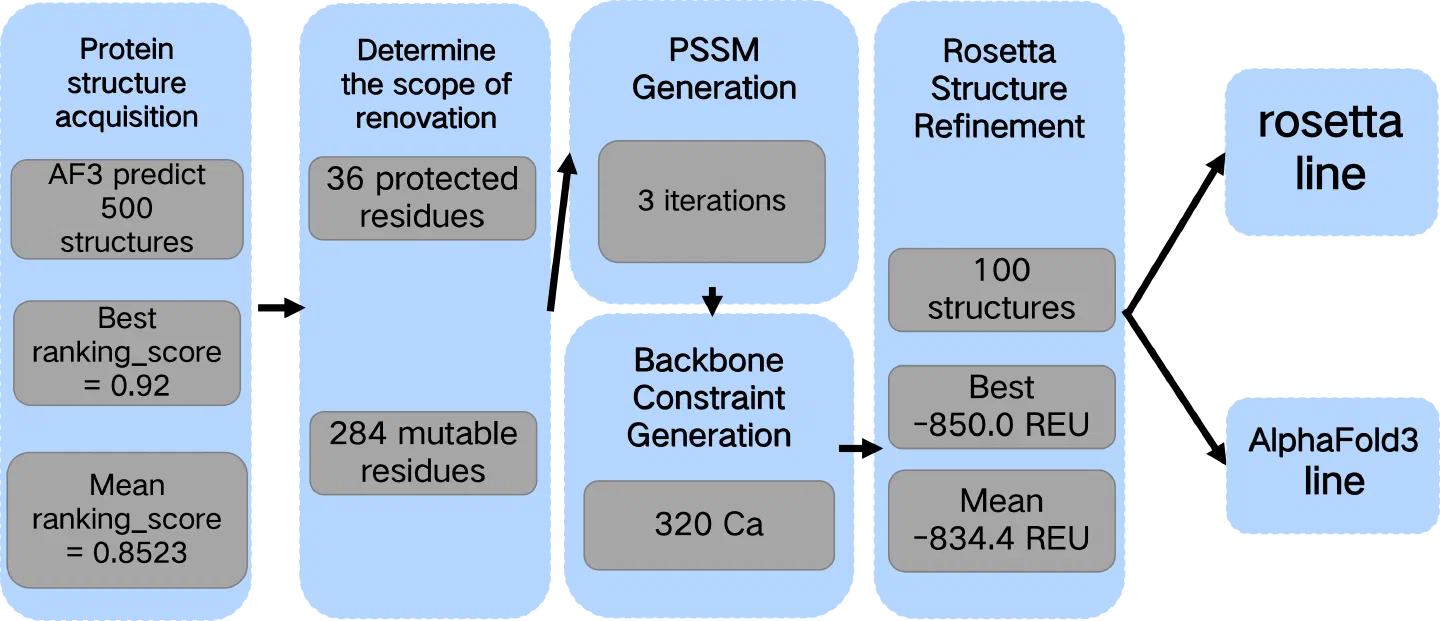
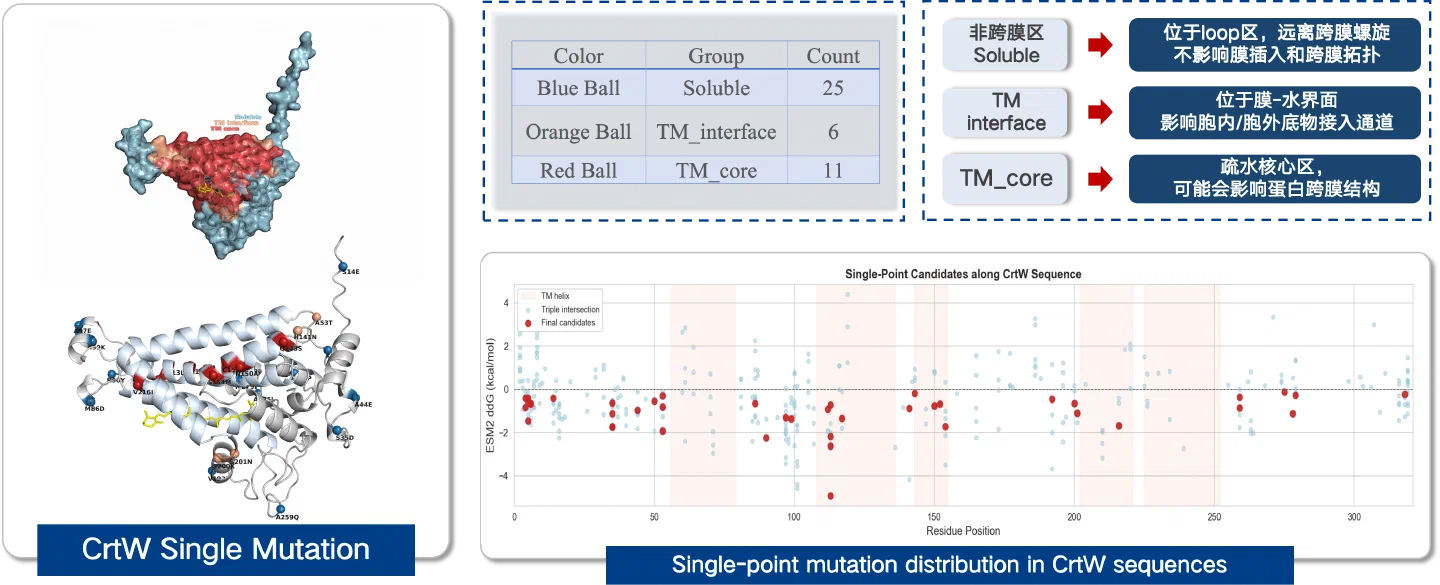
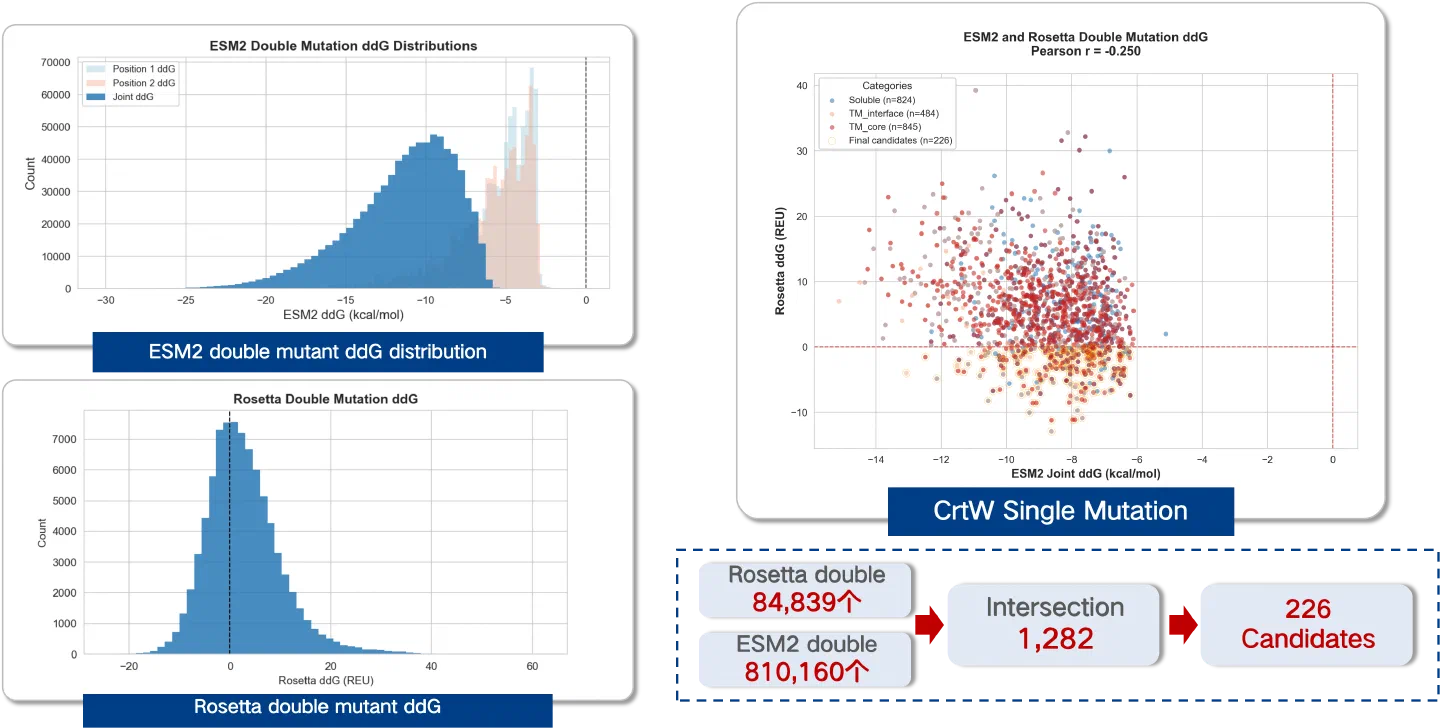
The design campaign combined two complementary signals across 320 residues, producing 268 candidates:
- Structure-based design — Rosetta FuncLib
- Sequence-based design — ESM2 and ThermoMPNN
The top 6 candidates then went through 2 µs molecular dynamics simulations, which probe what static predictions cannot: how the substrate is positioned over time, and how stable the ligand-binding pocket stays.
Tools: Rosetta, GROMACS, ESM2, PyMOL, AlphaFold3, HPLC.
Results
- G142P + I192L emerged as the strongest design, giving the most extended substrate positioning and the most stable ligand-binding pocket of the candidates — outperforming what the static structural predictions suggested, with no loss of protein stability.
- Carried into the wet lab, the top mutant confirmed the predicted improvement in vitro, reaching +46.7% yield over wild-type.
The MD stage is what separated the winning design from candidates that looked comparable on structure alone.